Mapping is the process of creating a visual representation of a geographic area or a collection of data. It is used to communicate information about a particular area or data set in an easy to understand format. Mapping is used in many areas of study including geography, urban planning, archaeology, biology, ecology, and many others.Mapping can be done in a variety of ways, including using computer software, drawing tools, and GPS technology.
Mapping is essential in many fields because it helps people to make sense of large amounts of data. For example, in geography, maps are used to show the physical features of an area, including mountains, rivers, and other landmarks. In urban planning, maps are used to show the location of roads, public transportation, and other infrastructure. In biology, maps are used to show the distribution of species or how habitat is being affected by environmental change.
Mapping can also help to identify patterns or trends in data. For example, in archaeology, maps can be used to show the distribution of artifacts or cultural features, which can help to identify patterns of past human activity. In ecology, maps can be used to show the distribution of species or the changing landscape of an area.
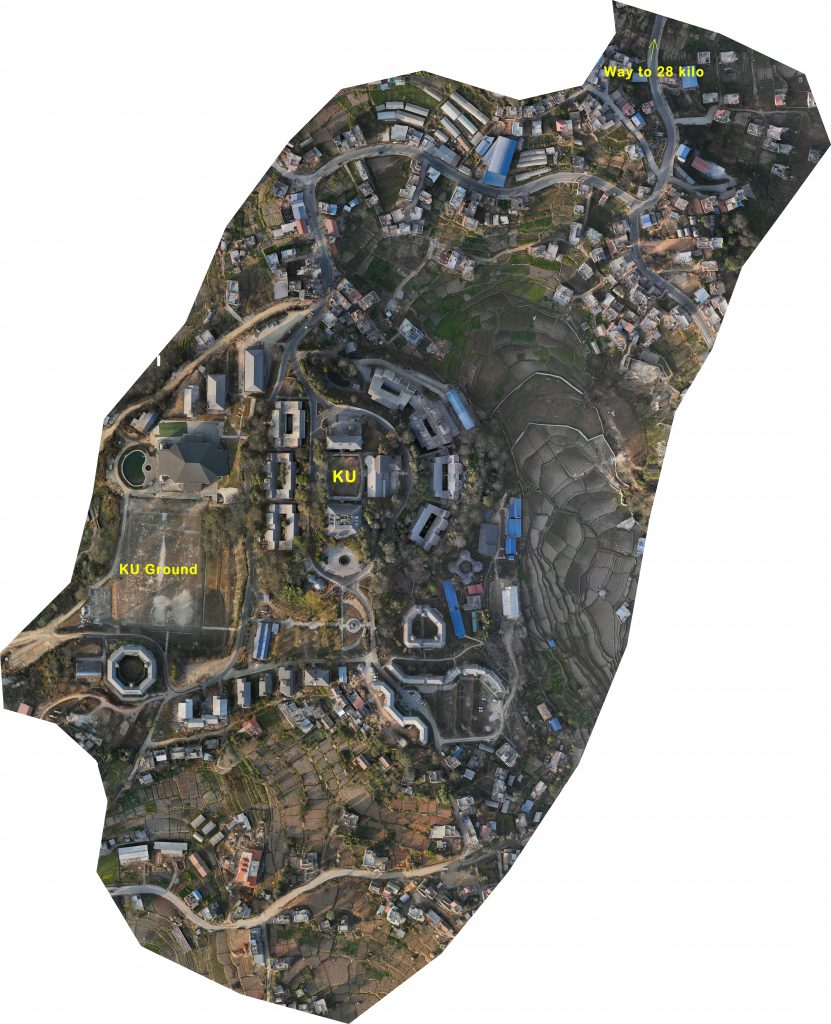
For creating maps either being 3D or an Orthomap I use Agisoft Metashape Pro to create them. Some examples of my work are presented below
Here's an orthomap of Kathmandu University that i created using Agisoft Metashape Pro
Another one is of Nupche-Likhu Hydropower Projects alignment that I visited during my internship
Another one is of the Powerhouse of the same hydropower project.
This one shows the directions from the powerhouse of Nupche-Likhu Hydropower Project to the camp where I stayed i.e. VEPL Camp
This map shows an orthomap of Nupche Headworks of Nupche-Likhu Hydropower project
This map shows an orthomap of Likhu Headworks of Nupche-Likhu Hydropower project (Mind the directions on top of this image)